
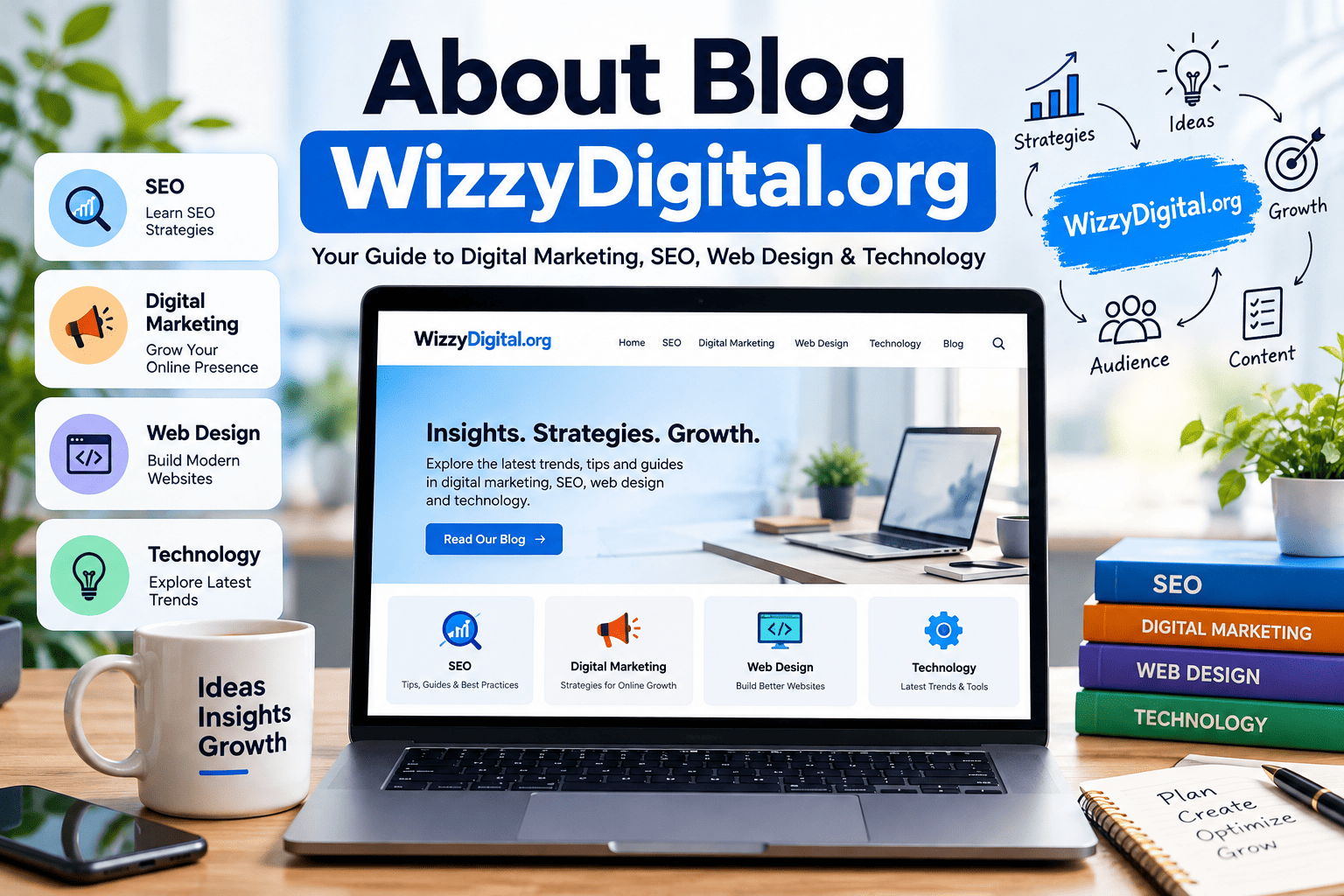
The internet is full of information, but finding practical and easy-to-understand guidance on digital marketing, search engine optimization, website development, and emerging technology can be challenging. This is where exploring about blog wizzydigital.org can help readers understand the purpose of the website, the subjects it covers, and the potential value it offers to people interested in the digital world.
WizzyDigital.org publishes content related to digital marketing, SEO, web design, and online growth. Its articles aim to help readers understand digital concepts, explore marketing strategies, and discover ways to improve their knowledge of the online landscape.
Whether you are a business owner, blogger, digital marketer, student, or technology enthusiast, understanding what WizzyDigital.org offers can help you decide which resources are relevant to your interests.
In this guide, we will explore the purpose of WizzyDigital.org, its main content categories, its potential benefits for readers, and practical ways to evaluate and use information from the website.
What Is About Blog WizzyDigital.org?
The phrase about blog wizzydigital.org generally refers to information about the WizzyDigital.org blog, its purpose, its content, and the audience it serves.
The website focuses on digital topics that can help readers develop a better understanding of online marketing and website management. These subjects are particularly relevant as businesses increasingly depend on their online presence to reach customers, build brand awareness, and communicate with their audiences.
Readers exploring the blog may be interested in learning about:
- Search engine optimization and organic visibility.
- Digital marketing strategies for businesses.
- Website design and user experience.
- Content creation and online publishing.
- Technology trends and digital tools.
- Practical approaches to improving an online presence.
The usefulness of any particular article depends on its accuracy, supporting evidence, and relevance to the reader’s needs. Therefore, readers should evaluate individual articles rather than assuming every recommendation will work for every website or business.
What Topics Does WizzyDigital.org Cover?
One of the main reasons people explore digital publications is to find information about different aspects of online growth. WizzyDigital.org covers several subjects connected with websites, marketing, and technology.
1. Search Engine Optimization (SEO)
SEO helps website owners improve their visibility in search engine results and attract relevant organic traffic.
SEO-related content can help readers understand how search engines discover, crawl, index, and rank web pages. It can also introduce practical optimization techniques that support better website performance.
Common SEO subjects include:
- Keyword research and search intent.
- On-page SEO and title tag optimization.
- Technical SEO and website structure.
- Internal linking and content organization.
- Website performance and mobile usability.
- Content quality and organic traffic analysis.
For example, a small business owner who wants to attract customers through Google can learn how to identify relevant search terms, improve service pages, and organize website content around customer questions.
However, SEO is a long-term process. Results depend on competition, website quality, technical implementation, and many other factors.
2. Digital Marketing Strategies
Digital marketing involves using online channels to connect businesses with potential customers.
A well-planned marketing strategy can combine search engines, social media, email marketing, paid advertising, and content marketing to achieve specific business objectives.
Readers interested in digital marketing may explore topics such as:
- Building an effective online marketing plan.
- Creating social media content.
- Improving website conversion rates.
- Generating qualified leads.
- Understanding marketing analytics.
- Developing a consistent brand identity.
The most effective approach depends on the target audience, available budget, product or service, and business goals.
For instance, a local service provider may prioritize local SEO and customer reviews, while an online store may focus on product pages, paid campaigns, email marketing, and customer retention.
3. Website Design and Development
A website is often one of the first places where potential customers interact with a business. Its design, speed, navigation, and accessibility can influence how visitors perceive the brand.
Website design and development resources can help readers understand the importance of:
- Mobile-friendly layouts.
- Clear navigation menus.
- Readable typography.
- Fast-loading pages.
- Secure website connections.
- Accessible content and interfaces.
- Conversion-focused page design.
A good website should make it easy for visitors to find information and complete their intended actions.
For example, an effective service page should clearly explain what the company offers, whom it serves, and how visitors can request more information.
4. Content Creation and Content Marketing
Content marketing involves creating useful material that attracts and informs a relevant audience.
Blog posts, tutorials, case studies, guides, and other resources can help businesses answer customer questions and establish subject-matter expertise.
Content-related topics may include:
- Developing a blog content strategy.
- Researching audience questions.
- Writing informative articles.
- Creating engaging headlines.
- Improving content readability.
- Updating outdated website pages.
- Measuring content performance.
A successful content strategy should prioritize the reader’s needs rather than simply publishing articles to increase word count.
Original insights, accurate information, practical examples, and clear explanations can make content more useful than generic material that repeats information already available elsewhere.
5. Technology and Digital Trends
Technology continues to influence how businesses operate, communicate, and market their products.
Readers may also explore topics involving digital tools, emerging technologies, website platforms, automation, and changing online practices.
When researching technology trends, it is important to check publication dates and verify product features against current documentation. Software interfaces, pricing, policies, and technical recommendations can change over time.
Who Should Read the WizzyDigital.org Blog?
The blog’s subject areas may appeal to different types of readers depending on their goals and experience.
Small business owners: Learn about online visibility, website improvement, and digital marketing opportunities.
Digital marketers: Explore SEO concepts, content strategies, marketing channels, and optimization techniques.
Bloggers and content creators: Discover approaches to content planning, writing, and audience engagement.
Website owners: Learn about usability, website structure, technical considerations, and performance.
Students and beginners: Develop a foundation in digital marketing and related technologies.
Experienced professionals: Research ideas and compare approaches that may be relevant to their existing projects.
Readers should select articles that address a specific problem instead of trying to apply every suggestion they encounter.
Key Benefits of Exploring About Blog WizzyDigital.org
Understanding the website’s content can help readers decide how to use it effectively.
Accessible explanations of digital concepts
Digital marketing and website development often involve technical terminology. Articles written in clear language can make these subjects easier to understand, especially for beginners.
Ideas for practical implementation
Useful guides can provide starting points for tasks such as planning content, improving website navigation, researching keywords, or reviewing marketing performance.
Exposure to different digital disciplines
SEO, website design, content creation, and digital marketing are interconnected. Exploring these subjects together can help readers understand how different activities contribute to an online strategy.
Opportunities for continued learning
The digital landscape changes frequently. Reading relevant articles and checking authoritative documentation can help professionals maintain their knowledge and identify areas for further research.
These benefits depend on the quality of individual articles and how thoughtfully readers apply the information.
How to Use WizzyDigital.org Effectively
Simply reading digital marketing articles does not automatically improve a website or business. The real value comes from selecting relevant information and applying it to a clearly defined objective.
Here is a practical process to follow.
Step 1: Identify Your Goal
Start by deciding what you want to accomplish.
Your goal might be to increase organic traffic, improve website speed, generate leads, build a content calendar, or understand a new marketing concept.
A specific objective makes it easier to find relevant information.
Step 2: Find Relevant Articles
Explore the website’s available categories and navigation options to locate articles related to your goal.
Use descriptive search queries when necessary, and prioritize resources that directly address your problem.
Step 3: Check the Information
Before implementing a recommendation, review the article’s publication date, author information, examples, and supporting evidence.
For technical subjects, compare the advice with official documentation or other credible sources.
This is particularly important for SEO updates, advertising policies, security practices, and software features.
Step 4: Apply One Improvement at a Time
Avoid changing multiple elements simultaneously if you want to understand which action produces a result.
For example, if you are improving an existing blog post, you might first clarify the search intent, strengthen the introduction, improve the heading structure, and add relevant internal links.
Step 5: Measure the Results
Use suitable analytics tools to evaluate whether your changes are helping.
Depending on the objective, useful measurements may include organic clicks, impressions, engagement, leads, conversions, or page performance.
Reviewing the results helps you decide whether to continue, adjust, or reverse an approach.
Can WizzyDigital.org Help With SEO and Online Growth?
WizzyDigital.org covers subjects relevant to SEO and digital marketing, so its content may provide ideas for readers who want to improve their online knowledge.
However, reading an article is different from implementing a complete SEO strategy.
Businesses seeking sustainable organic growth generally need to consider several areas together:
- Technical SEO: Make sure important pages can be crawled, indexed, and accessed correctly.
- Search intent: Create content that answers the questions users are actually asking.
- On-page optimization: Use clear titles, descriptive headings, and relevant internal links.
- Content quality: Provide accurate, original, and genuinely useful information.
- User experience: Make pages accessible, readable, and easy to navigate.
- Performance measurement: Use search and analytics data to identify opportunities.
No blog or marketing resource can guarantee search rankings. Google rankings depend on numerous factors, including relevance, quality, competition, and the searcher’s context.
For important website decisions, combine educational articles with first-party data from tools such as Google Search Console and Google Analytics.
How to Evaluate the Credibility of a Digital Blog
When researching any website, including WizzyDigital.org, readers should look beyond attractive headlines and general claims.
Use the following checklist to evaluate an article before relying on it.
Author transparency: Does the article identify its author and provide relevant expertise or background?
Evidence: Are factual claims supported by reliable sources, examples, or data?
Accuracy: Does the article distinguish established facts from opinions and assumptions?
Freshness: Is the information current enough for the topic being discussed?
Practical value: Does the content explain how to use the information, including relevant limitations?
Editorial quality: Is the article clear, well organized, and free from misleading claims?
These checks are useful for any digital publication. They help readers make better decisions without relying solely on a website’s branding or marketing language.
Frequently Asked Questions About Blog WizzyDigital.org
1. What is about blog wizzydigital.org?
About blog wizzydigital.org refers to information about the WizzyDigital.org blog, including its purpose, content categories, and relevance to people interested in digital marketing, SEO, website design, and technology.
2. What topics are covered on WizzyDigital.org?
The website publishes content related to digital marketing, search engine optimization, website design, content creation, and technology. The exact topics available may vary as new articles are published.
3. Is WizzyDigital.org useful for beginners?
Its digital-focused content may be useful to beginners looking to understand online marketing and website-related concepts. Beginners should choose introductory guides, verify important claims, and practice techniques appropriate to their goals.
4. Can I learn SEO from WizzyDigital.org?
You may find articles that explain SEO concepts and optimization practices. For a complete learning process, combine relevant blog articles with official Google Search Central documentation, practical exercises, and performance data from your own website.
5. Does WizzyDigital.org guarantee better Google rankings?
No. Reading or following a blog does not guarantee higher rankings. Search performance depends on many factors, and individual SEO recommendations must be evaluated in the context of a specific website and its competition.
6. How can I get the most value from the blog?
Identify a specific learning goal, choose relevant articles, verify the information, implement suitable recommendations, and measure the results. This approach turns passive reading into practical learning.
7. Should I trust every recommendation published online?
No. Evaluate the author’s expertise, the quality of supporting evidence, the publication date, and whether the advice aligns with authoritative guidance. Cross-check important technical or business recommendations before acting on them.
Conclusion
Exploring about blog wizzydigital.org provides a starting point for understanding a digital publication focused on SEO, digital marketing, website design, content, and technology.
For beginners, such resources can help explain unfamiliar concepts. For business owners and marketers, relevant articles may offer ideas for improving online visibility, refining content strategies, and developing stronger digital skills.
The key is to approach online information thoughtfully. Check sources, understand the limitations of individual recommendations, and measure the outcomes of changes you make.
Ultimately, successful online growth comes from combining reliable information with consistent execution, useful content, a positive user experience, and ongoing evaluation. By following these principles, readers can turn digital knowledge into practical improvements for their websites and businesses.