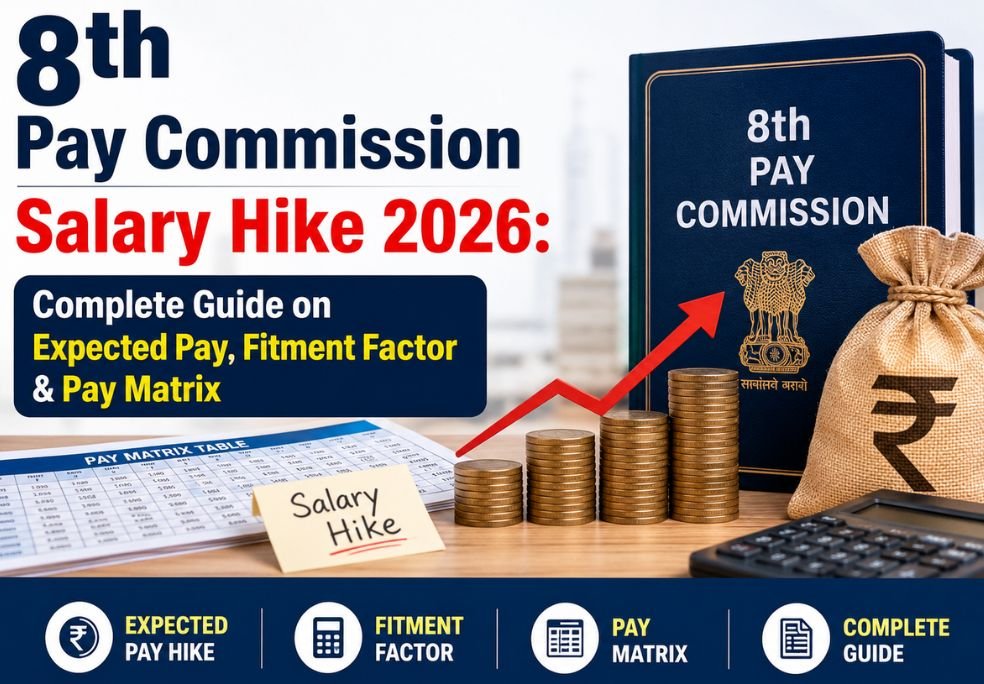
Without a doubt, the 8th pay commission salary hike will be the biggest talking point in the financial calendar of 2026 for central government employees. With lakhs of government employees specially teachers are keenly waiting for updated pay slips, new pension structures and lump-sum arrears at a time when understanding the full scale of 8th pay commission salary hike is more significant now than ever. It includes all important stuff from fitment factor to pay matrix to the pension revisions, for HRA changes to the most asked question by the employees that is – how much salary increase in 8th Pay Commission?
What Is the 8th Pay Commission?
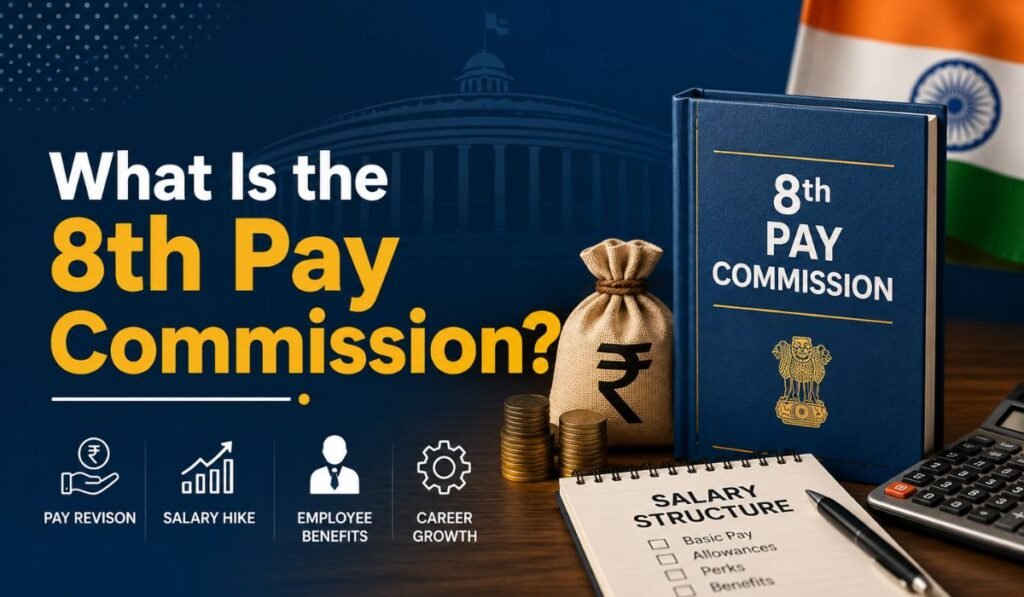
Every 10 years, India’s centre sets up a Pay Commission to revise rules on the pay scales of its employees, allowances, and pensions. The Union Cabinet headed by Prime Minister Narendra Modi had formally approved the constitution of the 8th Central Pay Commission (8th CPC) on January 16–17, 2025. Its recommendations are meant to be effective from January 1, 2026, the day the tenure of the 7th Pay Commission officially ended.
The commission consists of a Chairperson, one part-time member, and one Member Secretary. It has been mandated to examine the pay, pensions and service conditions for central government employees, evaluating it against fiscal prudence and the prevailing economic environment. The commission is expected to present its report within 18 months from its constitution.
Lawyer According to the official statement, raise in the 8th pay commission salary will benefit around 48.62 lakh central government employees and 67.85 lakh pensioners making it one of the largest salary revision exercise in Indian administrative history.
Read Also:- Salary for Product Manager | Dhirubhai Ambani International School Teacher Salary
Background: From 7th to 8th Pay Commission
To understand the magnitude of the 8th pay commission salary increase, one must first review what the 7th Pay Commission brought to the table in 2016. Therefore, the fitment factor of the 7th CPC stood at 2.57x (minimum basic pay raised from ₹7,000 to ₹18,000 a whopping 157% hike) It also brought in the pay matrix system which got rid of the older grade pay and pay band structure with a more cleaner and transparent pay structure.
A decade later, inflation has decimated purchasing power to a huge extent, and DA has risen to almost 60% of basic pay in January 2026. Hence, the 8th pay commission salary hike is likely to be huge not only for granting employees a bonus but also to absorb the DA amount so far accumulated into the new basic salary structure.
How Much Salary Increase in 8th Pay Commission?
It is the question that every government employee asking. The short answer is this: the final numbers are not official yet, as the commission is still in its consultative stage. But according to expert analysis and historical trends, here is what analysts and employee unions are predicting:
- Expected Hike in Salary: 30% to 40% on current CTC
- Lowest basic pay (Level 1): Expected to increase from 18,000 to 40,000–54,000.
- Related Content What to expect: The revisions at all levels are expected to be proportionate. Maximum Basic Pay:
- DA reset: Post implementation DA will be 0% as the accumulated DA is absorbed in the fitment factor
The most talked about 8th pay commission pay hike scenario, mentioned fitment factor of 2.57 to 2.86 same or marginally higher than the 7th CPC. For their part, employee unions are asking fitment factors between 3.00 to 3.83. The government is likely to settle on a more prudent number that strikes a balance between protecting employees and controlling the deficit.
Fitment Factor Scenarios and Salary Impact
| Fitment Factor | Current Basic Pay (₹18,000) | Revised Basic Pay | % Increase |
| 1.92x (Conservative) | ₹18,000 | ₹34,560 | ~92% |
| 2.28x (Moderate) | ₹18,000 | ₹41,040 | ~128% |
| 2.57x (7th CPC baseline) | ₹18,000 | ₹46,260 | ~157% |
| 2.86x (Optimistic) | ₹18,000 | ₹51,480 | ~186% |
| 3.00x (Union demand) | ₹18,000 | ₹54,000 | ~200% |
| 3.68x–3.83x (Highest demand) | ₹18,000 | ₹66,240–₹68,940 | ~268%+ |
Note: These are only projected estimates. The final figures will depend on the commission’s report and government approval.
Read Also:- SSC CGL Salary Per Month | Lighthouse Job Salary
Key Highlights of the 8th Pay Commission Salary Hike
Quick Points Taking of the Key Highlights of 8th pay commission salary hike:
| Parameter | Current (7th CPC) | Expected (8th CPC) |
| Minimum Basic Pay | ₹18,000 | ₹40,000–₹54,000 |
| Maximum Basic Pay | ₹2,50,000 | ₹3,50,000+ (estimated) |
| Fitment Factor | 2.57x | 2.57x–3.00x (projected) |
| Dearness Allowance | 60% (as of Jan 2026) | Reset to 0% on implementation |
| Minimum Pension | ₹9,000 | ₹20,500–₹25,740 |
| Effective Date | Jan 1, 2016 | Jan 1, 2026 |
| Employees Covered | ~48 lakh | ~48.62 lakh |
| Pensioners Covered | ~65 lakh | ~67.85 lakh |
| Arrears From | N/A | January 1, 2026 |
What is the Fitment Factor in the 8th Pay Commission
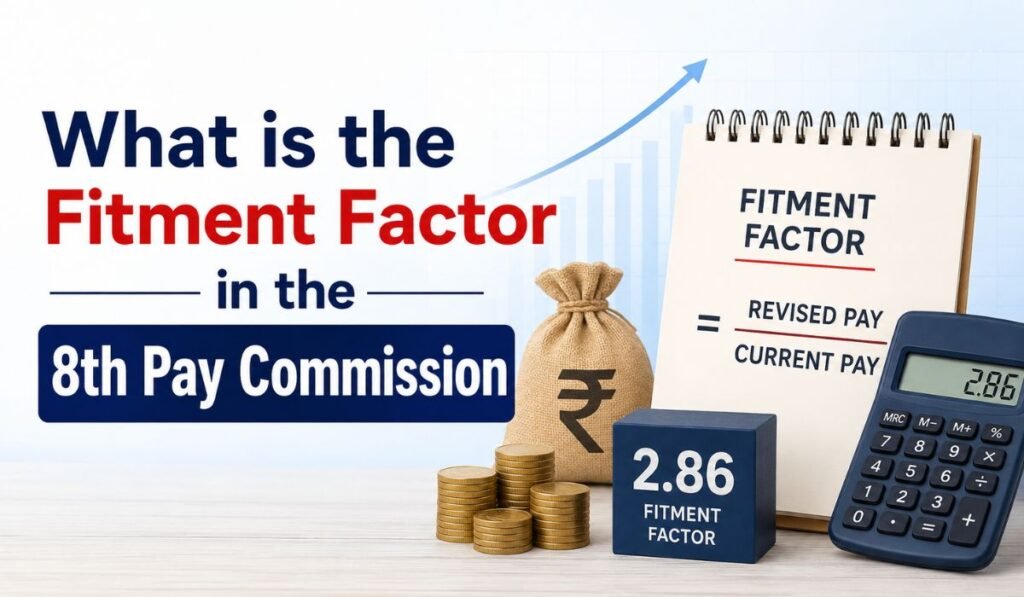
In 8th pay commission salary hike calculation, the single biggest number is the fitment factor. This is the multiplier which is multiplied to the existing basic pay of an employee to reach new basic pay.
Formula: Revised Basic Pay = Current Basic Pay × Fitment Factor
Which means that if ₹35,400 is your basic pay now, and 2.57 is the fitment factor, now your basic pay is ₹90,978 before DA, HRA and all other allowances.
Many factors contribute to this appearance of largesse but at its heart the fitment factor signifies more than a simple salary incremental it also absorbs the totality of Dearness Allowance into the new base year. That is the very reason DA resets to zero after every Pay Commission implementation. When it is just basic pay, the 8th pay commission salary hike may be reported to be 150–180%, but the net real hike (as DA already being paid) is just 30–40%.
Read Also:- IBPS Clerk Salary | Perfusionist Salary
Expected 8th Pay Commission Pay Matrix: Level-Wise Salary Projection
7th Pay Commission has also set 18 levels of pay (Level 1 to Level 18). This structure will remain the same in the 8th Pay Commission and the only thing that will change is the numbers, which will be readjusted using the fitment factor decided by the Government on the 7th Pay Commission. Here is a pay matrix perhaps projected with a fitment of 2.57x:
| Pay Level | Current Basic Pay (₹) | Projected Basic Pay @ 2.57x (₹) | Projected Basic Pay @ 2.86x (₹) |
| Level 1 | 18,000 | 46,260 | 51,480 |
| Level 2 | 19,900 | 51,143 | 56,914 |
| Level 3 | 21,700 | 55,769 | 62,062 |
| Level 4 | 25,500 | 65,535 | 72,930 |
| Level 5 | 29,200 | 75,044 | 83,512 |
| Level 6 | 35,400 | 90,978 | 101,244 |
| Level 7 | 44,900 | 1,15,393 | 1,28,414 |
| Level 8 | 47,600 | 1,22,332 | 1,36,136 |
| Level 9 | 53,100 | 1,36,467 | 1,51,866 |
| Level 10 | 56,100 | 1,44,177 | 1,60,446 |
| Level 12 | 78,800 | 2,02,516 | 2,25,368 |
| Level 13 | 1,23,100 | 3,16,367 | 3,52,066 |
| Level 14 | 1,44,200 | 3,70,594 | 4,12,412 |
Note: The figures depicted in this story are based on assumed fitment factor of 2.57x and 2.86x, subject to fitment higher final pay matrix will be advised on approval of the Government
HRA and Allowances Under the 8th Pay Commission
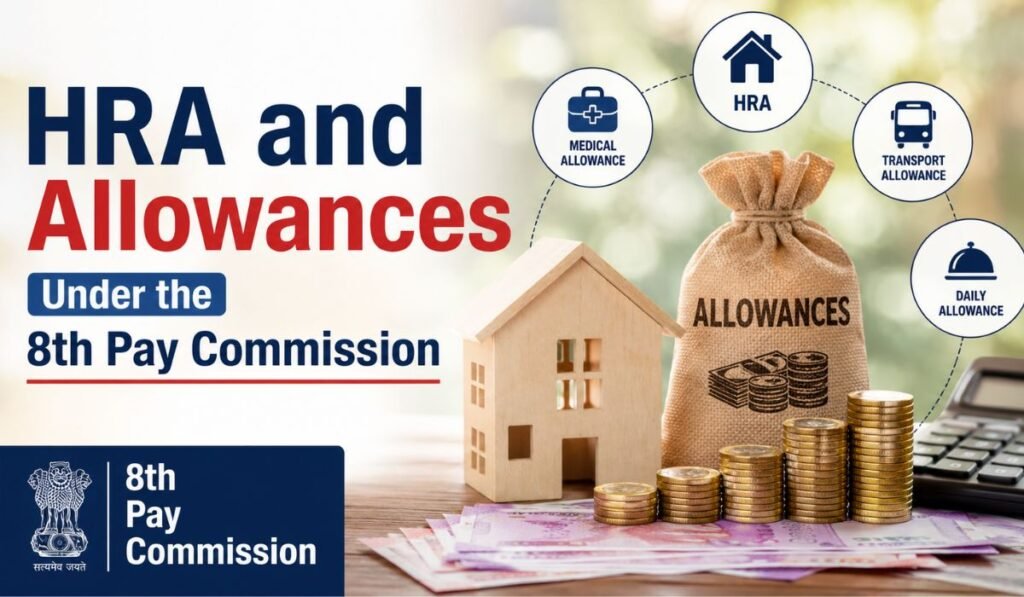
The 8th pay commission salary hike will not be confined to raw basic pay only. We also set several important allowances for revision:
- House Rent Allowance (HRA): As a percentage of basic pay 24% for X-category cities, 16% for Y-category, and 8% for Z-category as per 7th CPC. Under the 8th Pay Commission, thing will change due to the higher basic pay as HRA will increase automatically by a large amount. The revised HRA rate slabs might also get an upward revision.
- Transport Allowance (TA): It will be increased mainly in respect of increase in fuel and commuting cost.
- Dearness Allowance (DA): w.e.f. Jan 2026: 60% of basic pay At the time of announcing the 8th pay commission salary hike, DA will be set to 0% and existing DA will be merged into the new basic pay through fitment factor.
- Increase in Educational Allowance for Kids: Predicted to be increased to private school rates.
Depending on the nature of work Night Duty Allowance, Overtime Allowance and Deputation Allowance shall also be proportionately revised.
Pension Revision Under the 8th Pay Commission
It is no more serving employees than pensioners have all the right to keep a close eye on 8th pay commission pay hike. Note here what is prognosis on the pensions front:
- Minimum Pension: Increase in current ₹9,000 to around ₹20,500–₹25,740 depending on the fitment factor approved.
- Revision of Pension: Basic pension will be revised by applying same fitment factor as applicable to active employees.
- Dearness Relief (DR) – Will reset to 0% after implementation, similar to the DA reset applicable to active employees.
- NPS Contributions: As part of the National Pension System, contributions will go up in tandem with the higher basic pay.
- Pensioner associations have been urged for a higher gratuity ceiling, which is currently in effect.
- Minimum Pension Formula: an age-based progressive formula for Minimum Pension is being suggested, with a proposed minimum pension of 67% of Last Pay Drawn (LPD), rising to 100% salary replacement by age 90.
- Family Pension: The Army and defence pensioners have also made a specific demand of 40% family pension in the new salary hike framework of the 8th pay commission.
Pension Comparison Table
| Pension Component | Current (7th CPC) | Expected (8th CPC @ 2.57x) |
| Minimum Basic Pension | ₹9,000 | ₹23,130 |
| Dearness Relief | 60% | Reset to 0% |
| Gratuity Ceiling | ₹20 lakh | Proposed ₹25–₹30 lakh |
| Annual Increment Rate | 3% | 3%–5% (proposed) |
Arrears: A Major Benefit of the 8th Pay Commission Salary Hike
Arrears payout is getting more traction at the 8th pay commission salary hike Despite the effective date being January 1, 2026, the revised pay is unlikely to come until the commission tables its report and the government promulgates the new structure (probably late 2026 or in 2027), so workers will be owed back pay for the entire intervening time.
Based on expert projections:
- For most employees, a 12–18-month delay can mean an average of ₹1 lakh or more in arrears.
- Arrears for Level 1 will be around ₹ 3–4 lakh, sources said.
- Employees in Level 10 and above may get arrears of ₹15 lakh or more.
- Retired personnel shall also get the modified pension and arrears thereon starting from 01 January, 2026.
An important caveat is that all the arrear estimates are projections, not official statistics. The actual amount would depend on the final fitment factor approved as well as the date of actual implementation and the pay level at which the employee is.
Implementation Timeline of the 8th Pay Commission
To know when exactly will the 8th pay commission salary hike be realised in your salary account, you need more clarity on when it will impact you.
| Milestone | Date / Status |
| 8th CPC Formally Constituted | January 16–17, 2025 |
| Effective Date of Recommendations | January 1, 2026 |
| MyGov Public Feedback Portal Closed | March 31, 2026 |
| Regional Stakeholder Consultations | Ongoing (June 2026 in Lucknow, UP) |
| Expected Report Submission | Late 2026 (estimated) |
| Government Acceptance & Notification | 2026–2027 (estimated) |
| Revised Pay in Salary Accounts | 2026–2027 with arrears from Jan 2026 |
Who Benefits from the 8th Pay Commission Salary Hike?
Directly to the 8th pay commission salary hike:
- Civilians in central government (Group A, B, C, D),
- Defence Personnel (Army, Navy, Air Force)
- Pensioners of the Central government who retired on or before December 31 Poor pensioners
- Employees of autonomous bodies of the central government connected to the government
It does not directly cover state government employees. However, as per normal practice, most state governments also follow a similar structure of pay revision within a span of 1–2 years of the central government implementing it.
Key Demands from Employee Unions
Many trade unions and federations of employees have sent memorandums to the 8th Pay Commission. Their key demands include:
- Fitment factor no less than 3.00x to 3.68x
- Basic minimum pay: ₹26,000 (some unions demand ₹51,480 and above)
- Annual increment increased from 3% to 5%
- There was DA merger with basic pay at the time of implementation
- Reduction of the period of pension commutation restoration from 15 years to a period of 10–12 years
- Higher gratuity ceiling
- Army MSP Hike of 40% +MACP Promotions Benefits
- Pension at 67% of Last Pay Drawn as a minimum
Tax Planning After the 8th Pay Commission Salary Hike
Higher basic salary, thanks to the mass increase in 8th pay commission salary hike will also end up with bigger tax amount, as the taxability will be calculated based on basic salary. Without pre-emptive measures, an increase in gross income may induct employees into a higher income tax slab where the net impact of the salary raise is much lower.
Employees should consider:
- NPS contributions under 80CCD(1B) are not limited to 10% of the gross income i.e.
- Claiming full HRA exemption wherever applicable
- Whether one is going for a new tax regime or old one, the investment options need to be visible to the public.
- This is why it is important for you to understand that Arrears are actually charged under section 89 relief.
If the 8th pay commission salary hike leads to an increased tax outgo then the idea will not fulfil its true purpose; however, advance planning of taxes will help you ensure that you get the maximum benefit to take home.
7th vs 8th Pay Commission: Key Differences
| Feature | 7th Pay Commission | 8th Pay Commission |
| Effective From | January 1, 2016 | January 1, 2026 |
| Fitment Factor | 2.57x | 2.57x–3.00x (projected) |
| Minimum Basic Pay | ₹18,000 | ₹40,000–₹54,000 (estimated) |
| Pay Structure | Pay Matrix (18 levels) | Revised Pay Matrix (expected) |
| DA at Implementation | ~125% (merged) | ~60% (to be merged) |
| Employees Benefitted | ~47 lakh | ~48.62 lakh |
| Pensioners Benefitted | ~53 lakh | ~67.85 lakh |
Frequently Asked Questions (FAQs)
Q1. How much salary increase in 8th Pay Commission?
Realistically, the 8th pay commission salary hike is expected to be between 30% and 40%. Consequent upon implementing the fitment factor between 1.92x and 3.00x, increase in basic pay (before DA absorption) would be to the extent of nearly 92% to 200%.
Q2. When will the 8th Pay Commission salary hike be implemented?
8th salary hike implementation date for the pay commission is January 1, 2026. But revised pay slips are unlikely to be given until late 2026-27, after the commission submits its report and the government officially notifies the new structure. Payable of the Arrears will be from 1 January 2026.
Q3. What is the expected fitment factor for the 8th Pay Commission?
The most likely fitment factor to consider is between 2.57 and 2.86. The employees’ unions are demanding up to 3.68–3.83, while the government would preferably have them settle for a considerably lesser number. The number will be finalized in the formal report from the commission.
Q4. What will be the minimum basic pay after the 8th Pay Commission salary hike?
The fitment factor is pegged at 2.57x which means that basic pay (Level 1) will increase from the current ₹18,000 to about ₹46,260 and be the minimum amount. It gets a fitment factor of 2.86x, meaning it can go up to ₹51,480. Union demands range from ₹66,000 to as high as ₹69,000
Q5. How are arrears calculated under the 8th Pay Commission?
Arrears are calculated from 01.01.2026 till the date of actual revise pay implementation.. The final revised salary is summated over the entire duration and paid at once, minus the salary disbursed as it was due (for every month). Arrears can be between ₹3 lakh and ₹15 lakh plus depending on the pay level and number of months delay.
Q6. Will DA reset to zero after the 8th Pay Commission salary hike?
Yes. Dearness Allowance goes back to 0% after every Pay Commission. The fitment factor converts the cumulative Dearness Allowance (DA) which currently stands at 60% into a higher revised basic pay. From the date of entry, NO DA accumulation has worked.
Q7. Do state government employees benefit from the 8th Pay Commission salary hike?
The 8th pay commission salary hike is applicable only to the central government employees and pensioners. It is not binding on the state governments, but most states typically enact a nearly identical revision within one or two years of central implementation.
Q8. Will pensioners also receive the 8th Pay Commission salary hike benefits?
Yes, pensioners are fully covered. The same fitment factor will be used to revise basic pension. The minimum pension is said to increase from ₹9,000 up to the range of ¤ 20,500–₹25,740. The base for Dearness Relief will also restart at 0% and be recalculated on the new base.
Q9. What is the official effective date of the 8th Pay Commission?
Well to note, the 8th pay commission salary increase is effective from January 1 of the year 2026. On November 3, 2025, the commission was formed by way of government notification while it was officially announced on January 16–17, 2025.
Q10. How many people are covered by the 8th Pay Commission salary hike?
The 8th pay commission salary increase is estimated to be a boon for about 48.62 lakh central government employees and 67.85 lakh pensioners, making it one of the largest wage fixation exercises in India with benefits applicable to over one crore public servants.
Conclusion
Salary hike due to 8th pay commission is a huge historic moment for central employees and pensioners of country. Their basic salary is projected to rise by 30–40% in real terms, the fitment factor is expected to be around 2.57x – 2.86x along with large upward revisions in pension and allowances and staggering arrears payments payable from Jan-26 will mean dramatic financial windfall for millions of families.
At this stage in mid-2026 the commission is still in its consultation process and nothing has been finalised, but it is clear where things are heading. The 8th pay commission hike may be the biggest compensation reform for India’s government workforce since 2016. Official information updates must be followed by all Employees & pensioners, through CJCMS/Central Government services and the web portal of 8th CPC (8cpc. gov.in) and the MyGov platform for all recent notifications and final suggestions.

Dalvi is a passionate content writer and digital researcher associated with SalarySlip.co.uk, specializing in finance, salary insights, and career guidance. With a strong focus on delivering accurate and user-friendly information, Dalvi creates well-researched content that helps readers understand payslips, tax structures, and income-related topics. Backed by a keen interest in SEO and digital trends, Dalvi ensures every article is informative, engaging, and optimized for search engines, making complex financial concepts simple and accessible for everyone.